Hotels
 Activities
 Holidays
 Transfers
 Insurance
 Cruises
 Restaurants
 Blogs

How to Choose Your Umrah Travel Dates
Every individual pilgrim does not have a definite best month, but it would depend on your personal preference, such as having better weather, having less people, experiencing Ramadan in its atmosphere, school and work schedule, or specific budget.
Climate wise, Makkah experiences warmer days throughout most of the year, and since Islamic calendar moves backwards from the Gregorian calendar by about ten days each year, the month of Ramadan moves earlier each year, thus causing high demands around this month and others.
The following guide will highlight some of the seasons and help you plan based on weather, crowd and cost. Climate statistics should be taken as past averages and should not be considered forecasts, and current travel needs to be determined.
At a glance
- For more comfortable weather: November – February months
- For the experience of Ramadan: There will be increased demand, particularly during the last ten days
- For having flexibility of dates: Choose any other date except during Ramadan and other holiday seasons, but keep in mind that there could be fluctuations in crowd sizes.
- Budget planning: Comparing overall costs of trips rather than individual costs like airfares and hotel charges.
- Pre-trip planning: Checking visa, permit, health and seasonal entry needs prior to travel.
Weather in Makkah Throughout the Year
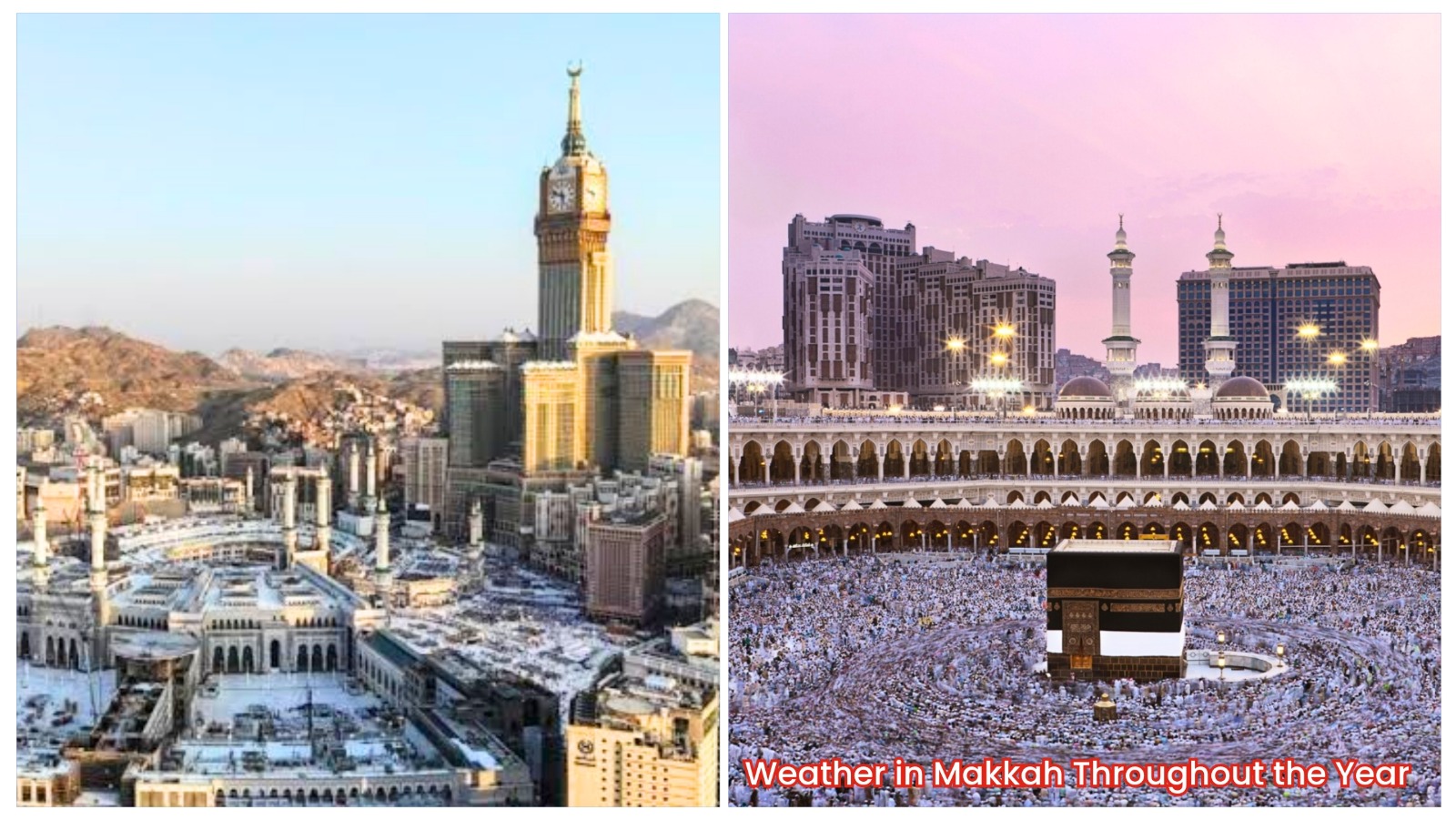
The weather in Makkah can be characterized as hot and dry. Even when the cooler period comes, the temperatures will still be quite warm especially if you are outside and walking around. According to the climate averages that have been published by the World Meteorological Organization, the mean daily maximum temperature for January in Makkah is 30.5°C, February is 31.8°C and March is 34.9°C. In May and June, the climate averages are 42°C and 43.8°C respectively. These averages are calculated based on past climatic data and not based on a particular trip.
November to February: relatively milder days
This period is a good start point for those planning to escape from the intense summer heat. The days are relatively milder compared to the late spring and summer although the temperature in the afternoons could still be relatively warm.
This is a period preferred by most travelers and does not necessarily guarantee cheaper cost and less crowds. Check the dates in relation to school holiday periods and the Ramadan period.
March & April: warmer weather
Weather gets warmer in the spring months. While it may not be as warm at the start of March compared to April, the difference could be obvious if you go outside for a walk. If you plan to travel during this time, consider having rest stops and leaving some space in your schedule.
It may differ significantly based on how this period overlaps with Ramadan and holidays.
May – September: very hot
This time may be very challenging due to the high temperature. Going for long walks outside or waiting in open areas will be much harder, especially for elderly people, children and those with some health issues.
If there is no other way but to visit during this time, you should get ready for the warm weather: drink water often, rest, dress accordingly and follow recommendations of the local healthcare facilities. It might be good to consult your doctor if you have a certain medical condition that may be affected by the heat.
October: transitional month
October is still warm, especially early in the month, but this time comes after the warm months and starts transitioning into colder winter months. Find out the weather forecast before the trip and adjust your plans accordingly.
When Will the Crowds Be Biggest?
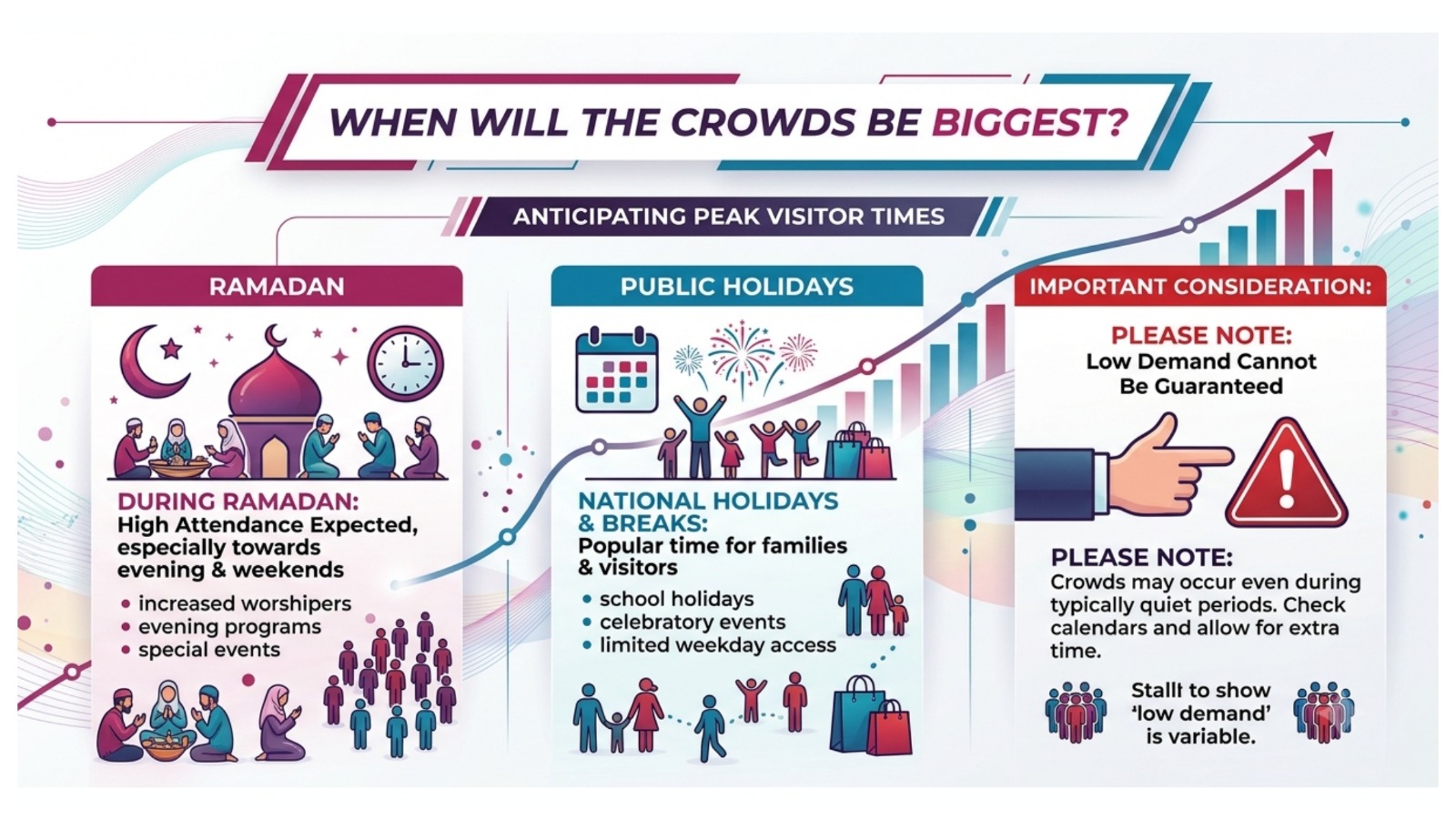
The crowds are affected by the Islamic calendar, the schedule of schools and public holidays, so the same Gregorian month can have different demand.
Ramadan and the last ten days
Ramadan is a special period for many pilgrims, when the demand is usually high. It is especially true about the last ten days, when travelers will have to deal with crowded prayer places, long waiting times, increased traffic and limited hotel options around the Haram.
When you plan to travel in Ramadan, you should make all necessary arrangements in advance and leave some time for airport pickup and transportation in crowded areas. You should think whether you like the atmosphere in Ramadan or not.
Public holidays and school breaks
During school holidays, the demand is increased because of family trips. Periods close to public holidays can also be crowded depending on your home country and traveling habits. Look at the calendars of Saudi Arabia and your own country.
Dates with low demand cannot be guaranteed
Traveling in Ramadan and holiday periods is difficult and expensive, but traveling outside this period does not guarantee that everything will be easy and cheap. There are many reasons why the demand can be increased. If the crowd is important for you, you should choose flexible dates and consider several weeks, or explore other halal-friendly holiday packages, cruise packages, halal restaurants, and halal-friendly activities worldwide provided by Halal Explore.
Would you like any additional tweaks to the formatting or anchor text placement?
How Will the Season Affect Your Budget?

The prices for Umrah travel are not set according to any one fixed monthly price list. Your budget will depend on many factors such as the city of departure, airline, booking period, location and type of hotel, hotel occupancy, length of stay, and transportation.
Consider the entire trip, not just one advertised price
In assessing a halal holiday package or putting together an itinerary of your own, look at whether the cost covers:
- Return flights and baggage allowance
- Hotel accommodation and meal plan: Review options for halal-friendly hotels and nearby halal restaurants.
- Transfers: Convenient airport pickup and transfers between cities.
- The cost of visas and related services
- Travel insurance: Consider specialized coverage like halal insurance (Takaful).
Cancellation, alteration, and refund policies
While a hotel further away from the Haram will generally have cheaper rooms, take into account how frequently you will need to arrange transport, how long trips might take, and whether the hotel is convenient for all members of the party.
Ways to Ensure Flexibility in Planning
If you do not have set dates, look at several travel weeks and the prices available for varying lengths of stay. Before committing to payment, request the full terms and what happens in case you change your flight or wish to cancel. Be ready to make early bookings for the peak season, but don't assume an early booking means it will be refundable.
Umrah Planning Tips for Every Season
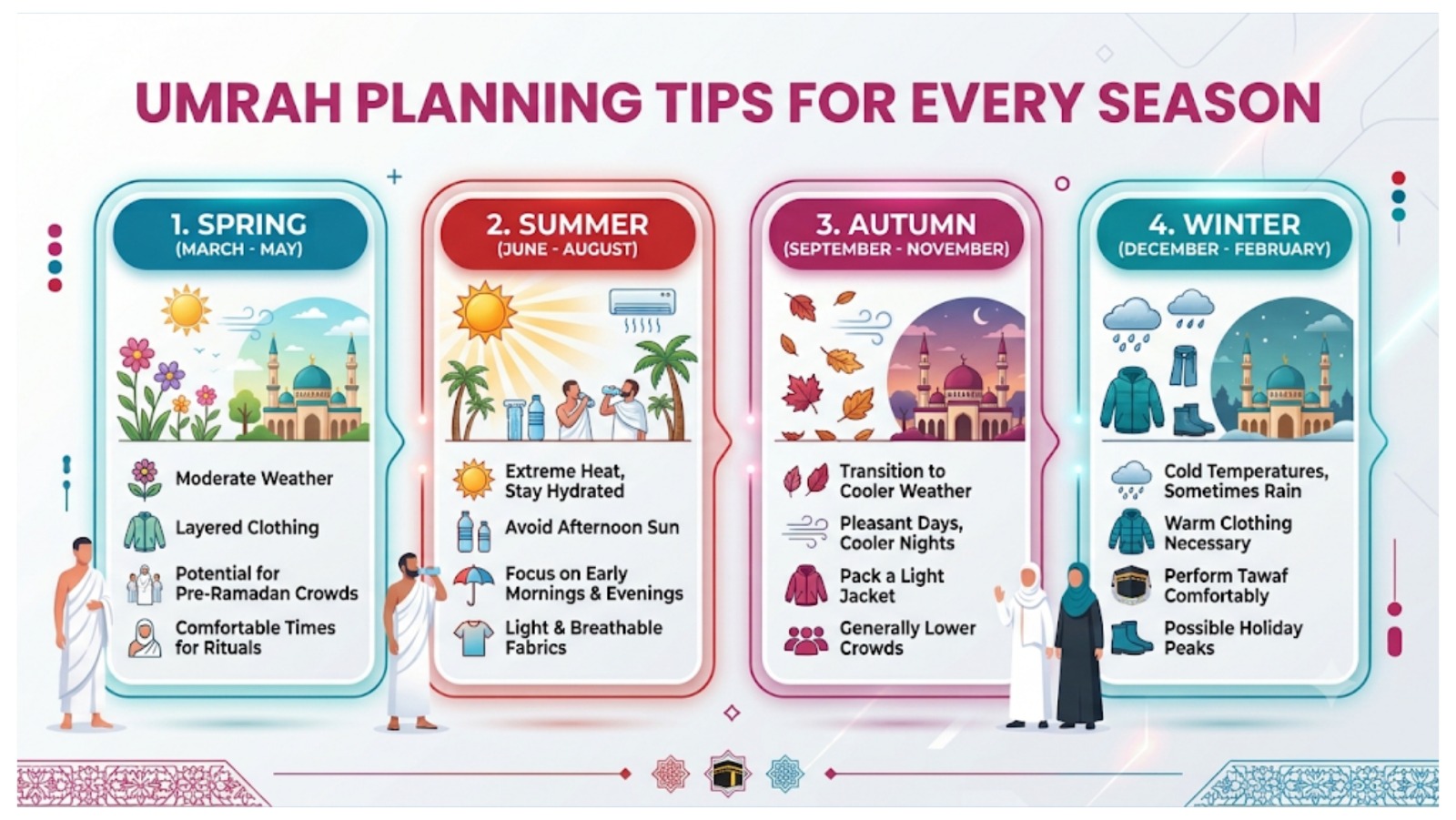
| Priority | Time to Consider | Considerations |
|---|---|---|
| Mild days | November to February | Even at this time of year, it can get quite warm. |
| Performing Umrah during Ramadan | Period during Ramadan in your travel year | There will be high demand, especially during the last ten nights. |
| Flexibility with dates and choice of hotels | Periods which are not public holidays | Availability will vary. |
| Travel when schools are on holiday | Your local school holiday dates | Early booking is essential; check if the same dates are in high demand in Saudi Arabia. |
| Avoiding heat exhaustion | Mostly cooler months if possible | Consider breaks and check the weather forecast even in winter. |
Hints To Help You Plan Ahead
1. Learn about regulations that will govern your trip
Entry routes, permits, medical criteria, and seasonality can change. Find out what the regulations will be for your nationality, visa, and travel dates via Saudi government information and the Ministry of Hajj and Umrah. The Saudi government has a Nusuk Umrah registration service, and Nusuk is an app used for pilgrims' services. Requirements will vary depending on your situation, so make sure to check before taking old travel advice into account.
2. Choose accommodation considering your daily routine
Consider hotel walking distance, transportation options, accessibility, occupancy policy, and cancellation policy. What may look like a convenient distance on the hotel's map does not necessarily mean it will be convenient for you to walk. Check the details of the offer and do not hesitate to read it carefully.
3. Don’t fill your first day to the brim
It is better to avoid making too many plans for the first day of your trip. Your flight may be delayed, you may feel tired from travel, or you may simply need some time to get settled.
4. Pack comfortable shoes, clothes, and personal medication
Ensure you have comfortable shoes that you have already broken in, appropriate clothing, and any personal medication. You may find evenings in cooler months are quite different from warm afternoons. In hotter months, ensure you have sun protection.
5. Create a simple plan
If you are travelling with family or a group, decide on a meetup point. Store your hotel details and main contact information somewhere easily accessible. If you are travelling with children or elderly family members, you may wish to plan regular break times.
6. Take care of your health
Ensure you are drinking plenty of water, taking breaks, and following current health guidelines. If you have a medical condition, mobility issues, or concerns about how much you should be doing in the heat, speak to a healthcare professional before traveling.
Frequently Asked Questions (FAQs)
Best Month To Go On Umrah?
If you want to avoid the heat, November through February is a great time. Otherwise, it will depend on your availability, budget, health, and whether you wish to experience Ramadan.
Is it Busier During Ramadan?
Yes, it is typically a very busy time to go—especially during the last 10 nights! You will need to plan ahead and expect delays with transportation, accommodation, and visiting busy areas.
Is it Cheaper Outside Ramadan?
You may get more options outside of peak times; however, there is no guarantee that certain months will be cheaper. Look into flight and hotel costs for your specific dates to see what is included.
Is it Cold In Makkah During Winter?
It is relatively cooler during the winter, but it can still be quite hot during the day. Historically, average temperatures range between 30–32°C during January and February. Always check the forecast closer to your travel date.
How Far In Advance Should I Book?
There is no set rule for how far in advance to book. However, if you are traveling during Ramadan or school holidays, booking flights and accommodations early is highly recommended. Always review cancellation and amendment policies carefully.
Final Thoughts
Overall, the best dates will be between November and February for a good balance between cooler weather and flexibility. If you want to perform Umrah during Ramadan, it is a spiritually rewarding option, but be prepared for larger crowds and higher demand. If you are traveling during hotter months, ensure you schedule downtime, stay hydrated, and allow extra time for travel delays.
For more resources on planning your trip, explore Halal Explore to discover halal-friendly activities worldwide and cruise packages.
Please let me know if you would like any further adjustments to the links or layout!
Ready to Plan Your Umrah Journey?
Let Halal Explore make your spiritual journey seamless and stress-free.
Explore our curated Halal-Friendly Holiday Packages, compare top-rated Halal Hotels, and arrange reliable Airport Transfers—all in one place.