 Hotels
 Activities
 Holidays
 Transfers
 Insurance
 Cruises
 Restaurants
 Blogs
Blogs
Introduction
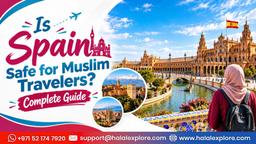
Spain is one of Europe's most popular holiday destinations, attracting travellers with its historic cities, Mediterranean coastline, architecture, shopping, food and cultural heritage. For Muslim travellers, Spain also offers an established halal-friendly travel infrastructure, including halal restaurants, Muslim-friendly hotels, mosques, Islamic cultural centres and prayer facilities.
But an important question for many Muslim families and first-time visitors is: Is Spain safe for Muslim travelers?
The short answer is that Spain is generally considered a safe destination for tourists, while travellers should follow the same sensible precautions they would use in other major European destinations. Spain's official tourism website describes the country as one of the safest countries in the world but advises visitors to take precautions against theft, particularly in crowded areas and on public transport.
For Muslim travellers, safety is not only about crime. It can also mean feeling comfortable with halal food, finding places to pray, choosing suitable accommodation and understanding local customs.
Spain performs well in these areas. The country's official tourism resources specifically promote Spain as a halal-friendly destination and provide information about halal restaurants, Muslim-friendly hotels, mosques and prayer facilities.
This guide covers everything Muslim travellers should know before visiting Spain, including safety, halal food, prayer facilities, Muslim-friendly cities, accommodation and practical travel tips. Travellers can also explore halal-friendly activities when planning sightseeing and experiences that suit their travel preferences.
Is Spain Safe for Muslim Travelers?
Yes, Spain is generally a safe destination for Muslim travellers, including families, couples and solo visitors.
Spain's official tourism website provides general safety guidance and recommends basic precautions such as looking after belongings in crowded places, carrying only the money needed and avoiding isolated areas.
At the same time, official foreign-travel advice warns visitors about common risks such as street theft, demonstrations and the possibility of terrorist attacks. These risks are not specific to Muslim travellers and are reasons for maintaining normal travel awareness.
Muslim travellers can therefore approach Spain as they would any major international destination:
- Keep valuables secure.
- Be particularly careful in crowded tourist areas.
- Use reputable transportation.
- Keep copies of important travel documents.
- Stay aware of local announcements.
- Follow instructions from local authorities.
- Know the emergency number 112.
- Research halal restaurants and prayer facilities before travelling.
The Spanish emergency number 112 is free and available throughout the country. Spain's tourism authority states that emergency services can track the caller's location and that multilingual telephone interpretation is available.
Is Spain Muslim-Friendly?
Spain has a well-established Muslim community and provides a range of services for Muslim visitors.
Spain's official tourism information states that the country has more than 250 official mosques and Islamic religious centres, while its Muslim-travel resources provide information about halal accommodation, restaurants and places of worship.
Spain's tourism authority also reports that the country has approximately 2.4 million Muslims and more than 1,800 Islamic places of worship in its current country information.
This means Muslim travellers are not limited to simply finding vegetarian food or adapting their entire itinerary around religious requirements. In many major destinations, travellers can find dedicated halal services.
However, services vary by city and property. A hotel described as Muslim-friendly may provide halal food on request, Qibla information or prayer facilities without being completely halal-certified.
It is therefore important to check the specific services before booking.
Travellers looking for accommodation can also explore halal-friendly hotels before finalising their Spain itinerary.
Halal Food in Spain
One of the biggest concerns for Muslim travellers is finding reliable halal food.
The good news is that Spain offers a growing range of halal dining options. Spain's official halal tourism guide explains that travellers can find halal restaurants as well as vegetarian options and establishments willing to accommodate special dietary requests when arranged in advance.
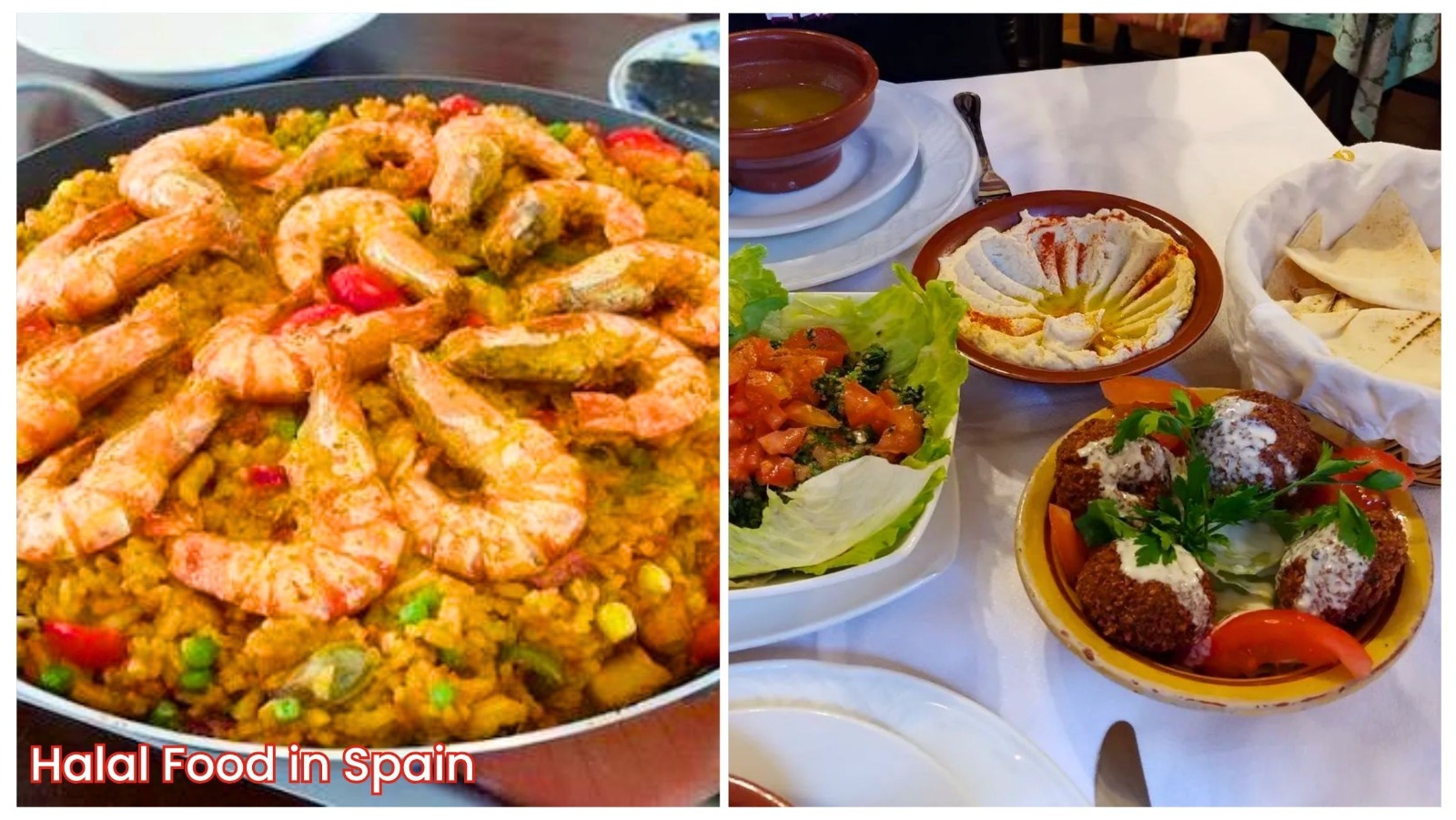
In larger cities such as Madrid and Barcelona, Muslim travellers can find restaurants serving cuisines from different regions, including Middle Eastern, North African, South Asian and Mediterranean food.
For travellers who want to research dining options before departure, halal restaurants can be explored as part of their holiday planning.
Is Halal Food Easy to Find in Spain?
Halal food is generally easier to find in major cities and areas with established Muslim communities.
Madrid's official tourism website specifically provides information about halal tourism and says visitors can find halal culinary options as well as hotels with Muslim-friendly services.
Spain's official tourism information for Madrid also advises visitors looking for 100% halal food to check the city's halal tourism resources for both meat and vegetarian options.
When travelling outside major cities, it is advisable to research restaurants in advance rather than assuming that halal food will be readily available.
Tips for Finding Halal Food
Before visiting a restaurant, Muslim travellers can ask:
- Is the meat halal-certified?
- Is alcohol used in the preparation?
- Is the food cooked separately?
- Does the restaurant have a halal certificate?
- Are halal options available throughout the day?
- Is advance booking required?
If a restaurant does not offer halal meat, vegetarian and seafood options may provide alternatives, but travellers should still check the ingredients and preparation according to their personal requirements.
Muslim-Friendly Hotels in Spain
Accommodation is another important part of a comfortable Muslim-friendly holiday.
Spain's official tourism website highlights hotels that provide services for Muslim guests, including halal food, prayer facilities, Qibla information and other tailored services.
Madrid's tourism authority specifically mentions hotels offering halal cuisine, prayer mats, prayer rooms and directions towards Makkah.
Some hotels may offer:
- Halal meals
- Halal food on request
- Prayer mats
- Qibla direction
- Prayer rooms
- Alcohol-free rooms on request
- Nearby halal restaurants
- Family rooms
However, Muslim-friendly does not automatically mean that every service is available at every hotel.
Before confirming your booking, ask the property about the exact facilities you require.
Travellers can also explore HalalExplore's halal-friendly hotel collection, which is designed to help Muslim travellers identify accommodation with relevant halal-friendly amenities.
Best Cities in Spain for Muslim Travelers
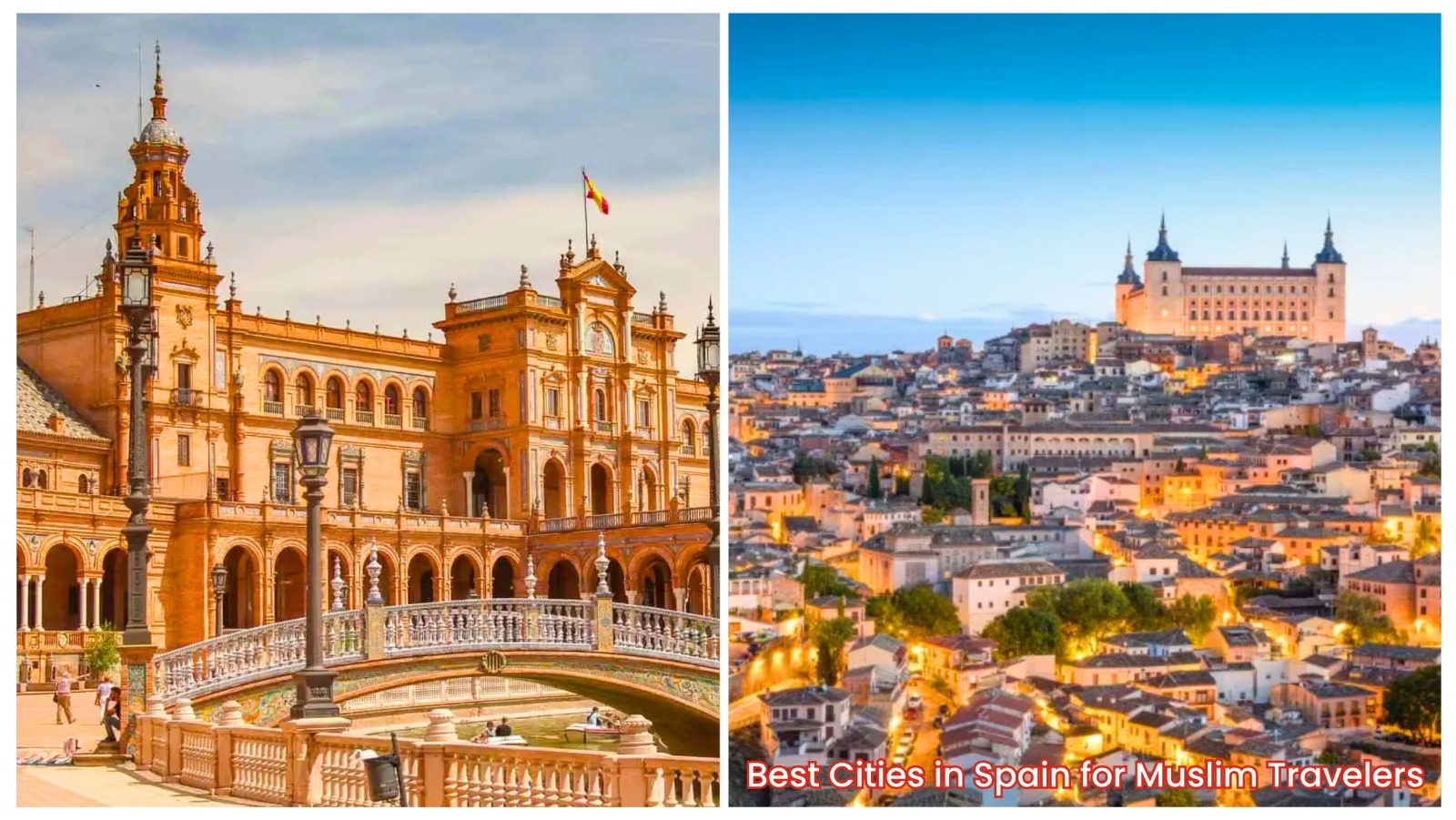
Spain has many destinations suitable for Muslim travellers, but some cities are particularly useful because of their history, tourism infrastructure and access to halal services.
1. Madrid
Madrid is an important destination for Muslim travellers because it combines modern tourism facilities with a long Islamic history.
The city's official tourism website promotes Madrid as a halal-friendly destination and highlights halal restaurants, Muslim-friendly hotels, mosques and Islamic cultural attractions.
Madrid also has the Islamic Cultural Center of Madrid, commonly known as the M-30 Mosque, and the Central Mosque of Madrid.
Madrid-Barajas Airport also has two mosques in the public areas serving Terminals 2 and 4, according to Madrid Tourism.
For Muslim travellers interested in history, Madrid also offers several reminders of the city's Islamic past.
2. Barcelona
Barcelona is another popular option for Muslim travellers.
The city combines architecture, beaches, shopping, family attractions and a diverse food scene. Spain's official tourism website identifies Barcelona as having halal accommodation options and several mosques.
Barcelona-El Prat Airport also has a multi-faith prayer room in Terminal 1, according to Spain's official halal tourism information.
Muslim travellers can also find mosques in different parts of the city, including the Raval area.
For families, Barcelona can offer a combination of sightseeing and leisure activities, making it possible to build an itinerary that includes cultural attractions, shopping and family-friendly experiences.
3. Córdoba
For Muslim travellers interested in Islamic history, Córdoba is one of Spain's most significant destinations.
The city was an important centre during the period of Al-Andalus and is home to the famous Mosque-Cathedral of Córdoba.
Córdoba is also included in official halal-friendly travel itineraries through Spain, including multi-day Muslim-friendly tours covering Madrid, Córdoba, Seville, Granada and other destinations.
Travellers interested in Islamic heritage can combine Córdoba with Granada and Seville to explore different aspects of Spain's Muslim history.
4. Granada
Granada is particularly well known for the Alhambra, one of Spain's most important historic landmarks.
The city provides an opportunity to explore the architectural and cultural legacy of the Nasrid period.
Official Spain tourism itineraries for Muslim travellers include Granada alongside Córdoba, Seville and Madrid, with visits to the Alhambra and other historic areas.
Muslim travellers interested in history can therefore include Granada as part of a broader Andalusia itinerary.
5. Seville
Seville is another important stop for travellers exploring Andalusia.
The city has a strong architectural connection with Spain's Islamic and Andalusian history and can be combined with Córdoba and Granada.
Official Muslim-friendly itineraries from Spain include Seville as part of multi-city routes through Andalusia.
Is Spain Safe for Muslim Women?
Muslim women can visit Spain and follow normal travel-safety precautions.
As with any major tourist destination, it is sensible to remain aware of your surroundings, particularly in crowded tourist areas, public transport and busy nightlife districts.
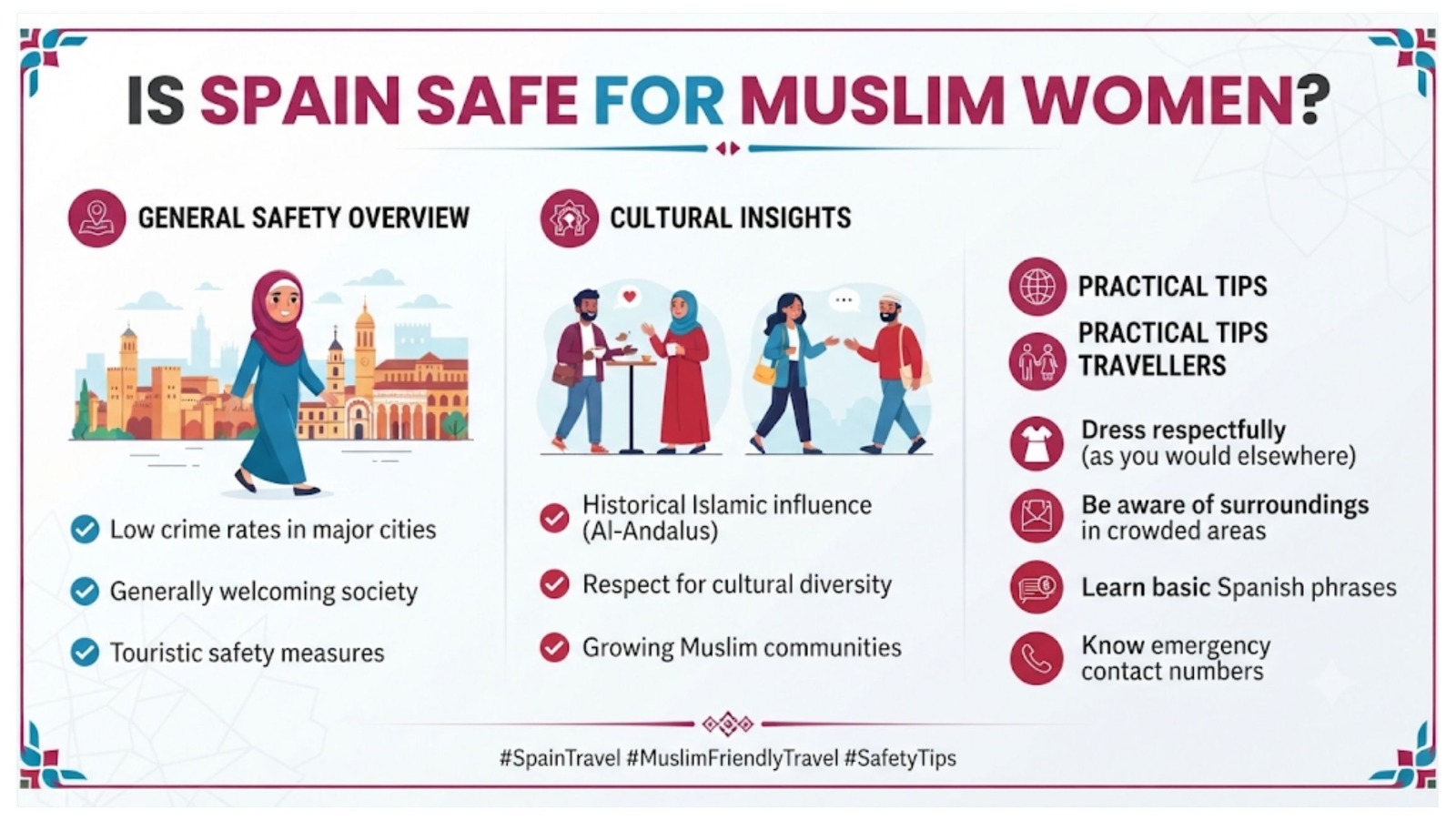
Women who wear hijab or modest clothing may attract occasional curiosity because dress customs vary across Europe, but travellers should distinguish between ordinary cultural differences and genuine safety concerns.
For a comfortable experience:
- Choose well-reviewed accommodation.
- Stay in populated areas when travelling alone.
- Keep your phone charged.
- Use licensed or reputable transportation.
- Share your itinerary with someone you trust.
- Avoid isolated areas late at night.
- Keep important documents secure.
Official UK travel advice also recommends staying aware of surroundings and taking precautions against street crime and theft.
Is Spain Safe for Muslim Families?
Spain can be a practical destination for Muslim families because major tourist cities offer hotels, restaurants, public transportation and family attractions.
Families can plan trips around cities such as:
- Madrid
- Barcelona
- Córdoba
- Granada
- Seville
- Málaga
Spain's official tourism website also provides family travel information and identifies a broad range of family-oriented attractions and destinations.
For families, hotel location can be just as important as hotel facilities.
When selecting accommodation, consider:
- Family rooms
- Connecting rooms
- Access to public transport
- Nearby halal restaurants
- Nearby mosques
- Breakfast options
- Distance from major attractions
Airport transfer arrangements
Families can also review halal-friendly holiday packages when planning accommodation, sightseeing and other elements of their trip.
Mosques and Prayer Facilities in Spain
Muslim travellers generally do not need to worry about being unable to find a place of worship in Spain's major cities.
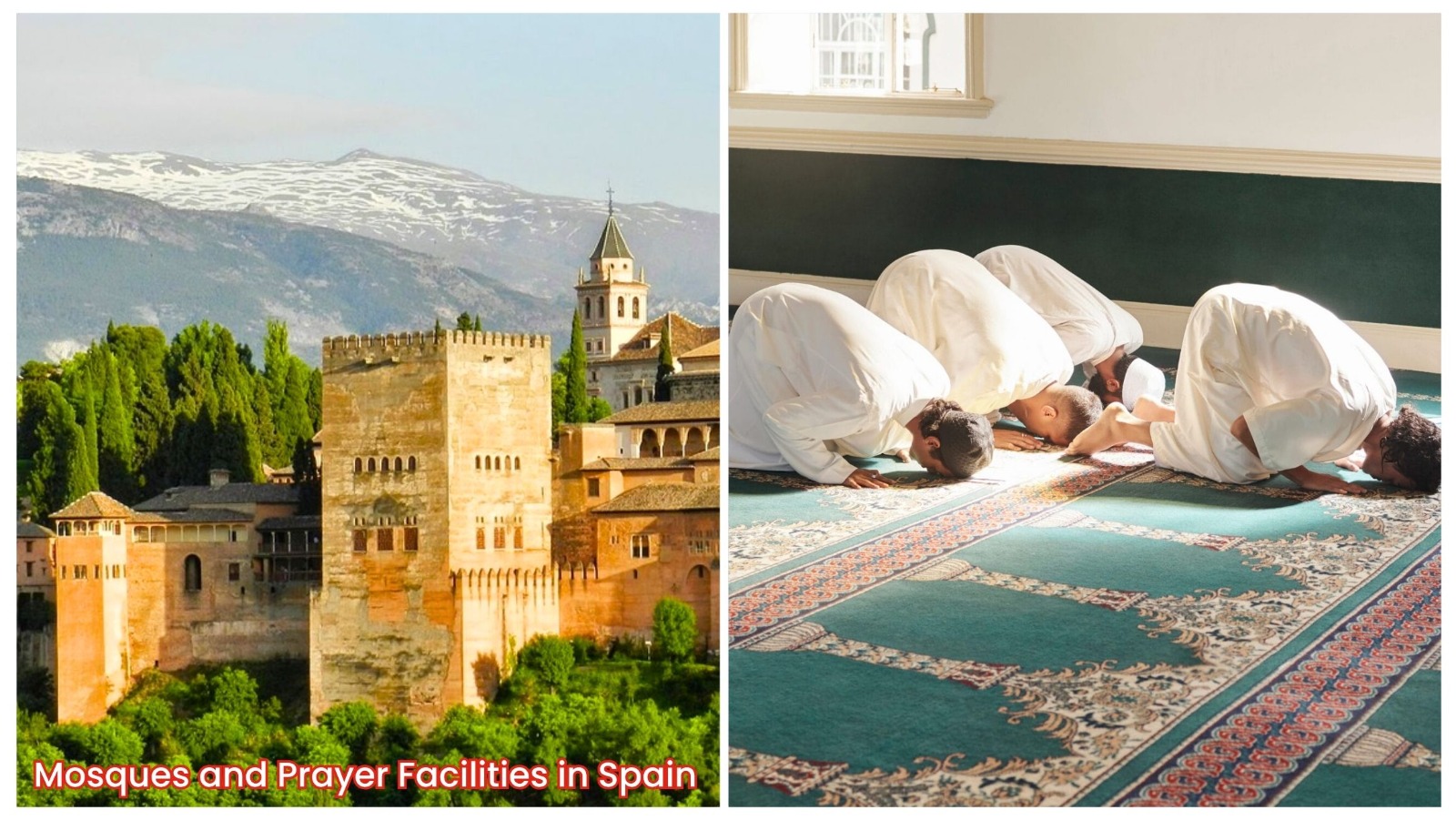
Spain's official halal tourism guide states that there are more than 250 official mosques and Islamic religious centres across the country.
Prayer Facilities in Madrid
Madrid has several important Islamic centres.
The Islamic Cultural Center of Madrid, also known as the M-30 Mosque, is one of the country's major Islamic centres. The Central Mosque of Madrid is another important place of worship.
Madrid-Barajas Airport also provides mosque facilities in the public areas of Terminals 2 and 4.
Prayer Facilities in Barcelona
Barcelona has mosques in different neighbourhoods, including the Raval area.
Barcelona-El Prat Airport has a multi-faith prayer room in Terminal 1.
For travellers with specific prayer requirements, it is still advisable to check opening times and exact locations before travelling.
Safety Tips for Muslim Travelers in Spain
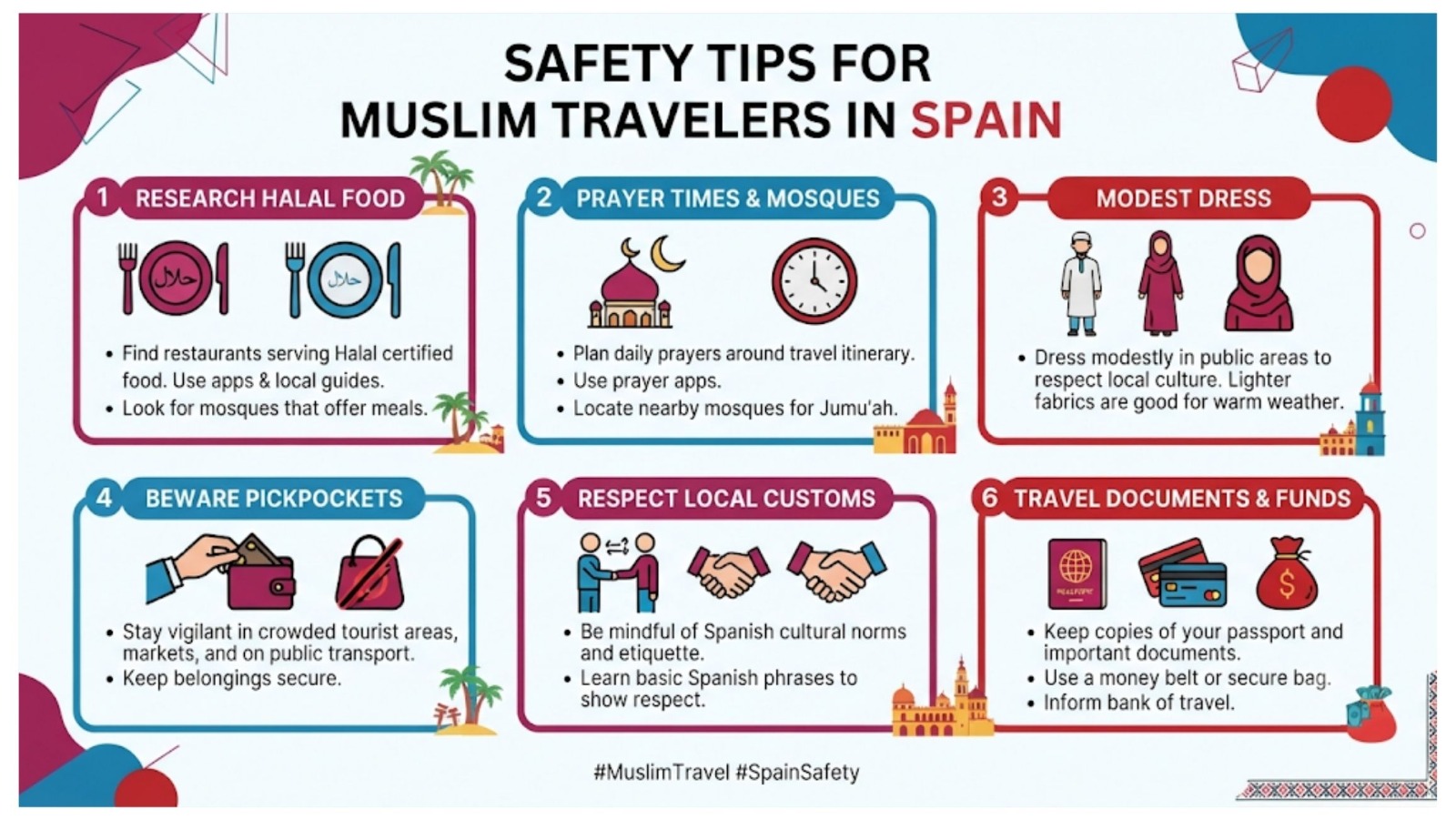
Although Spain is generally considered a safe tourist destination, following practical safety measures can make your trip more comfortable.
1. Protect Your Belongings
Pickpocketing and street theft can occur in busy tourist areas.
Keep passports, phones, wallets and other valuables secure.
Spain's official tourism guidance specifically recommends taking precautions against theft in crowded areas and on public transport.
2. Be Careful in Crowded Tourist Areas
Barcelona, Madrid and other popular destinations can become very busy.
Pay extra attention when:
- Using public transport
- Visiting major landmarks
- Walking through busy shopping streets
- Entering crowded attractions
- Carrying luggage
3. Keep Your Passport Secure
Carry your passport according to the requirements applicable to your nationality, but avoid leaving important documents unsecured.
Keep digital or physical copies of important documents separately.
4. Use Official Transportation
Use reputable taxis, licensed transportation services and established public transport networks.
If booking airport transfers, confirm the provider and pickup arrangements in advance. Travellers who want to arrange airport transportation can explore airport transfers and pickup services when planning their trip.
5. Be Aware of Demonstrations
Demonstrations and political gatherings can take place in Spanish cities.
UK travel advice recommends staying aware of local developments and moving away from demonstrations if there are signs of disorder.
6. Know the Emergency Number
The emergency number in Spain is:
112
It can be used for police, fire and medical emergencies.
7. Keep Travel Insurance
Travel insurance can help with unexpected situations such as medical emergencies, cancelled travel or lost belongings, depending on the policy.
Muslim travellers should review the policy terms before travelling and ensure that the coverage suits their itinerary.
Travellers can also review Halal insurance and Takaful options when considering travel protection.
What Should Muslim Travelers Wear in Spain?
There is no requirement for Muslim travellers to change their religious clothing when visiting Spain.
Visitors can generally dress according to their personal preferences and religious practices.
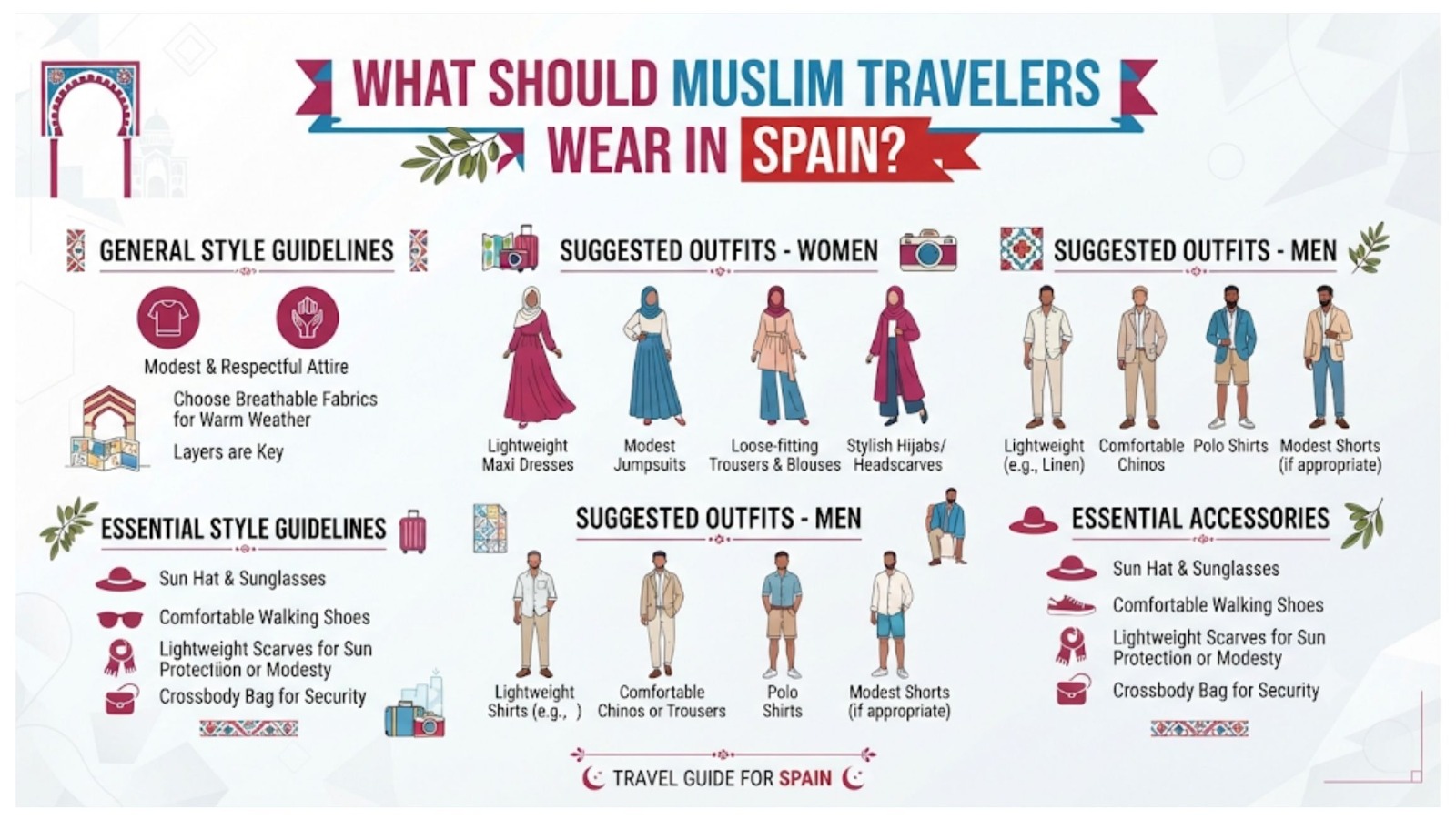
However, it is sensible to dress appropriately for the location and activity.
For example:
- Modest clothing can be useful when visiting religious or historic sites.
- Comfortable clothing is recommended for walking tours.
- A scarf can be useful for women who wish to maintain modest dress.
- Beach destinations may have different local customs from historic or religious sites.
As with travel anywhere, being respectful of local customs and venue-specific rules is recommended.
Is Halal Food Available at Spanish Airports?
Some Spanish airports provide facilities for Muslim travellers.
Madrid-Barajas Airport has two mosques in the public areas around Terminals 2 and 4, and halal meals are available in Aena VIP lounges. Barcelona-El Prat has a multi-faith prayer room in Terminal 1.
Because airport facilities can change, travellers should verify current opening arrangements before their journey.
Tips for Planning a Muslim-Friendly Spain Holiday
A successful Muslim-friendly Spain trip starts with planning.
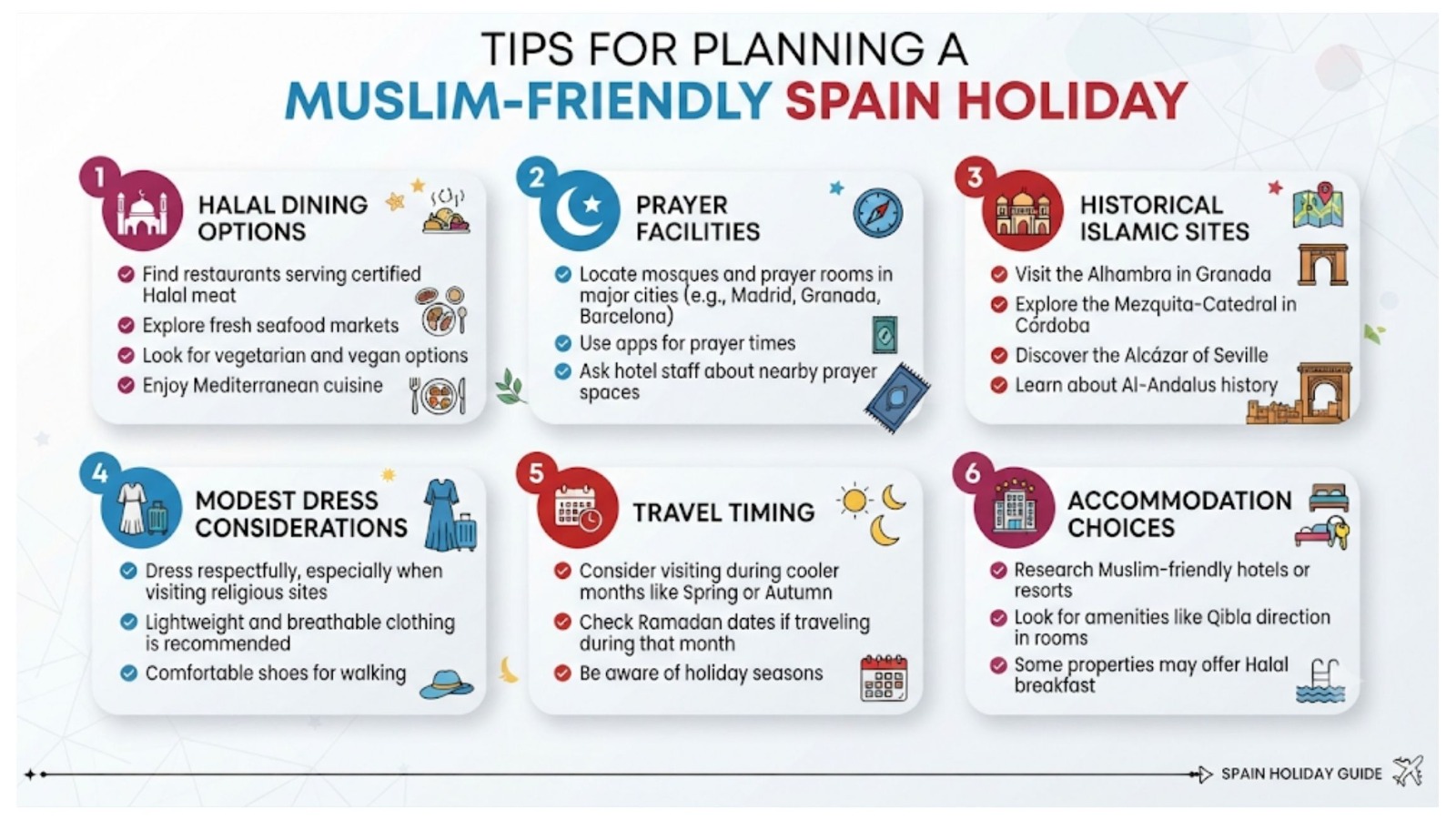
Before Booking Your Trip
Check:
- Visa requirements for your nationality
- Passport validity
- Travel dates
- Hotel location
- Halal food availability
- Mosque locations
- Airport facilities
- Transportation
- Travel insurance
Spain's official tourism portal provides dedicated information covering visas, passports, safety, healthcare, transport and other practical travel matters.
Before Booking Your Hotel
Ask:
- Is halal food available?
- Is halal breakfast available?
- Is advance notice required?
- Is a prayer mat available?
- Is Qibla direction provided?
- Is there a prayer room?
- Are alcohol-free rooms available?
- Are halal restaurants nearby?
Before Visiting Restaurants
Confirm whether:
- Meat is halal-certified.
- Alcohol is used in food preparation.
- Separate preparation is available if required.
- The restaurant currently serves halal food.
Suggested Muslim-Friendly Spain Itinerary
Muslim travellers who want to combine modern cities with Islamic heritage can consider a multi-city itinerary.
Days 1–3: Madrid
Explore:
- Royal Palace
- Gran Vía
- Retiro Park
- Madrid's historic centre
- Islamic Cultural Center
- Central Mosque
- Halal restaurants
Days 4–5: Córdoba
Explore:
- Mosque-Cathedral of Córdoba
- Historic centre
- Islamic heritage sites
Days 6–7: Seville
Explore:
- Historic centre
- Royal Alcázar
- Andalusian architecture
- Local food experiences
Days 8–10: Granada
Explore:
- Alhambra
- Albaicín
- Historic neighbourhoods
- Islamic heritage
Optional: Barcelona
Travellers with additional time can add Barcelona for:
- Sagrada Família
- Park Güell
- Gothic Quarter
- La Rambla
- Shopping
- Beaches
- Halal restaurants
- Muslim-friendly accommodation
Spain's official tourism authority itself publishes a 14-day route combining Barcelona, Madrid and Andalusia, demonstrating how naturally these destinations can be combined into one longer Spain itinerary.
Travellers interested in extending their journey with other halal-friendly experiences can also browse HalalExplore's halal-friendly activities.
Why Spain Can Be a Good Choice for Muslim Travelers
Spain combines several elements that can make planning easier for Muslim visitors:
Halal Dining
Major cities offer a range of halal restaurants and Muslim-friendly food options.
Mosques and Islamic Centres
Spain has a substantial network of mosques and Islamic religious centres.
Muslim-Friendly Hotels
Selected hotels provide halal food, prayer facilities, Qibla information and other services.
Islamic Heritage
Madrid, Córdoba, Granada and Seville provide opportunities to explore different aspects of Spain's Islamic history.
Family Travel
Spain offers beaches, parks, cultural attractions, shopping and family-oriented activities across its major destinations.
Modern Transport
Major cities are connected through airports, rail networks and public transportation, making multi-city itineraries practical.
How HalalExplore Can Help Plan Your Spain Holiday
Planning a Muslim-friendly holiday involves more than simply finding a hotel.
Travellers may need help with:
- Flights
- Hotels
- Airport transfers
- Halal-friendly accommodation
- Sightseeing
- Family holidays
- Travel insurance and Takaful
- Multi-city itineraries
HalalExplore provides halal-friendly travel services designed around the needs of Muslim travellers, including halal-friendly hotels, holiday packages, transfers, activities and other travel services.
Travellers can use HalalExplore to plan different parts of their holiday, including accommodation, airport transfers, activities and travel protection, helping bring multiple travel requirements together in one place.
Final Thoughts: Is Spain Safe for Muslim Travelers?
Spain is generally a safe and established tourist destination, and it has a significant range of services for Muslim travellers.
The country's official tourism authority promotes Spain as a halal-friendly destination and provides information about halal restaurants, Muslim-friendly hotels, mosques and prayer facilities.
Madrid and Barcelona are particularly practical starting points because they offer major tourist infrastructure alongside Muslim-friendly services. Andalusian destinations such as Córdoba, Granada and Seville add a strong Islamic historical dimension to a Spain holiday.
At the same time, Muslim travellers should not assume that every hotel or restaurant is halal-certified or that every city offers the same facilities. Checking food certification, prayer facilities, hotel policies and transportation arrangements before travelling is still important.
With sensible safety precautions and advance planning, Muslim travellers can explore Spain's cities, Islamic heritage, architecture, cuisine and natural attractions while arranging their trip around their personal halal and religious requirements.
Frequently Asked Questions
Is Spain safe for Muslim tourists?
Spain is generally considered a safe destination for tourists. Spain's official tourism website recommends normal precautions, particularly against theft in crowded areas. Travellers should also remain aware of demonstrations and follow local safety guidance.
Is Spain Muslim-friendly?
Yes. Spain has halal restaurants, Muslim-friendly hotels, mosques, Islamic cultural centres and prayer facilities. The official Spain tourism website specifically promotes Spain as a halal-friendly destination.
Is halal food available in Spain?
Yes. Halal restaurants and halal food options are available, particularly in major cities. Some hotels and restaurants may require halal meals to be requested in advance, so checking before arrival is recommended.
Are there mosques in Spain?
Yes. Spain's official tourism information states that there are more than 250 official mosques and Islamic religious centres across the country.
Is Madrid suitable for Muslim travelers?
Madrid has a well-developed Muslim-friendly tourism offering, including halal restaurants, Muslim-friendly hotels, mosques and Islamic cultural facilities. Madrid-Barajas Airport also has mosque facilities in Terminals 2 and 4.
Is Barcelona suitable for Muslim families?
Barcelona offers family attractions, Muslim-friendly accommodation, mosques and halal dining options. Barcelona-El Prat Airport also has a multi-faith prayer room in Terminal 1.
What is the emergency number in Spain?
The emergency number is 112 for police, fire and medical emergencies. The number is free and available throughout Spain.
Do Muslim women need to wear a particular type of clothing in Spain?
There is no general requirement for Muslim visitors to change their religious clothing. Travellers should dress appropriately for the activity and respect any specific rules at religious, cultural or private venues.
Can I find halal-friendly hotels in Spain?
Yes. Several Spanish hotels offer services for Muslim travellers, including halal food, prayer facilities, Qibla information and alcohol-free options in some properties. Availability varies by hotel, so specific requirements should be confirmed before booking.
What are the best places in Spain for Muslim travelers?
Madrid, Barcelona, Córdoba, Granada and Seville are useful destinations to consider. Madrid and Barcelona provide extensive modern tourism infrastructure, while Córdoba, Granada and Seville offer particularly strong connections to Spain's Islamic and Andalusian heritage.