Hotels
 Activities
 Holidays
 Transfers
 Insurance
 Cruises
 Restaurants
 Blogs
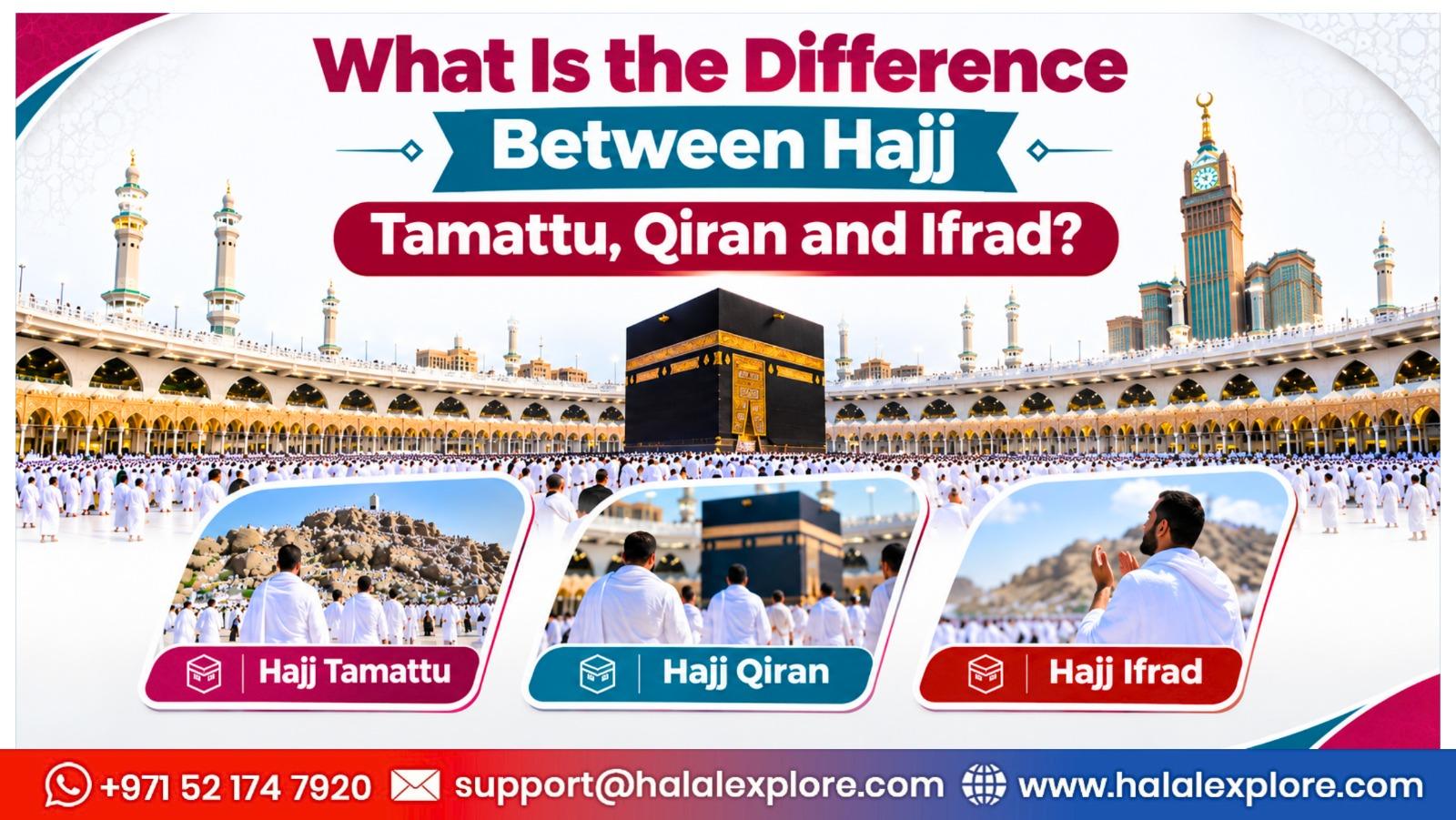
What Are the Three Types of Hajj?
There are three recognised types of Hajj - Tamattu, Qiran and Ifrad. Whilst they all feature the core Hajj rituals, they differ in how they incorporate Umrah:
Tamattu - Umrah is performed first. The pilgrim will go into ihram for Hajj after going out of ihram.
Qiran - You intend to perform Umrah and Hajj together. The pilgrim will stay in ihram.
Ifrad - You intend to perform Hajj on its own. Umrah is not performed.
Whilst the intention and order of the rituals change, the core locations of the Hajj will still be the same. Pilgrims will travel to Makkah, Mina, Arafat and Muzdalifah, at the times specified by your Hajj authority or group—often alongside halal-friendly activities and arrangements for halal-friendly hotels and best halal restaurants during the wider trip.
This article is intended to be a practical overview. Depending on your personal circumstances, Hajj type and school of thought, there can be variations. Please consult a qualified scholar or guide for your specific circumstances. For more information look here: Saudi Ministry of Hajj - Hajj Guide. Nusuk Hajj Rituals.
What Is Ihram and When Do Pilgrims Enter It?
Ihram is the sacred state a Muslim goes into with the intention of performing Hajj or Umrah. There are certain rituals, rules and restrictions in Ihram. Ihram is commonly used to refer to the clothing men wear but it refers to the actual state you go into with your intention.
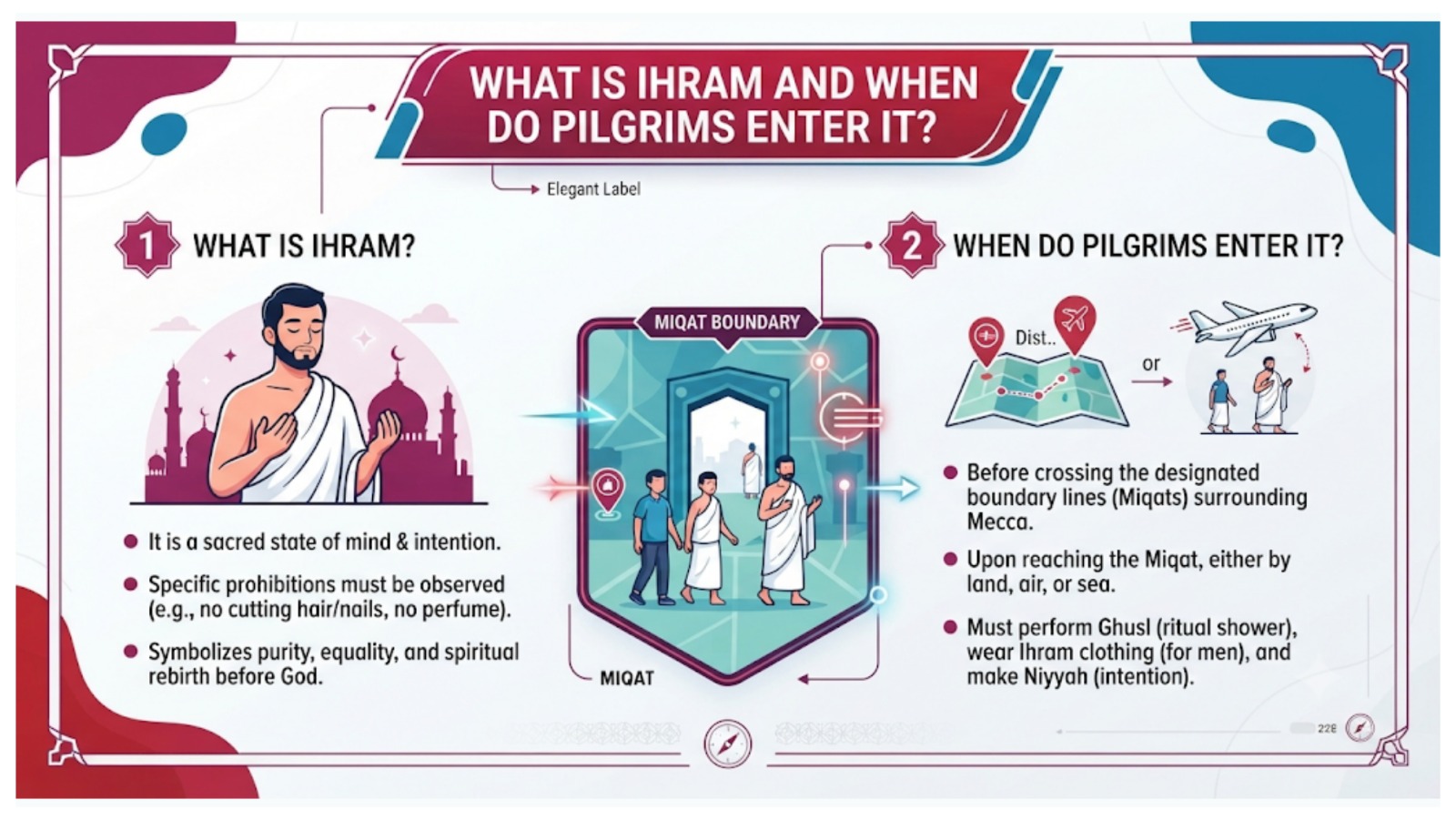
You will go into ihram at the correct time for your journey. Depending on your travel plans and Hajj type, you will go into ihram at different times. If you’re flying, your provider will explain how to prepare and when to go into ihram, alongside organising transfers and airport pickup and appropriate halal insurance (Takaful) or extended halal-friendly cruise packages before or after your pilgrimage.
The main difference between the three Hajj types is whether you go out of ihram after completing Umrah:
Tamattu - You complete Umrah, go out of ihram and then back into ihram for Hajj.
Qiran - You combine Umrah and Hajj. You stay in ihram.
Ifrad - You go into ihram for Hajj. You do not perform Umrah.
As there are certain rules in Ihram please ensure you know them from your Hajj guide. If you’re unsure whether something can be done, please consult a qualified scholar.
Hajj Tamattu: Umrah First, Then Hajj
Tamattu is a type of Hajj where the pilgrim performs Umrah during Hajj season. After completing Umrah the pilgrim will go out of ihram and then back into ihram for Hajj the same year.
This can often be a practical option if you arrive in Makkah early and have time to complete Umrah, giving you time to settle into halal-friendly hotels and explore nearby best halal restaurants between rituals.
The general process is:
- Go into ihram with intention for Umrah at the correct miqat.
- Travel to Makkah and complete Umrah, arranging smooth transfers and airport pickup upon arrival.
- Once Umrah has been completed, you will go out of ihram (based on your religious guidance).
- Stay out of ihram until you need to start Hajj, perhaps enjoying gentle halal-friendly activities as part of your wider travel plans.
Go back into ihram for Hajj and travel to Mina (based on your group's instructions).
The main thing to note is that there will be a gap between performing Umrah and Hajj. You should understand when you go out of and back into ihram.
Generally, eligible pilgrims who are not residents of the Sacred Mosque area will have to perform a sacrificial offering (hady). Rules can vary depending on your personal circumstances. Please confirm with your official provider or qualified scholar whether you will have to do this, how it will be organised and what payment will be required. Nusuk Hajj Rituals.
Who May Want to Perform Tamattu?
Tamattu may be a good option for you if you have time to complete Umrah and are happy to go into ihram twice. It can provide a clear gap between the two parts of your journey. Depending on your personal circumstances, package, halal insurance (Takaful), and religious guidance you may find it suitable—even if you are combining your trip with extended options like halal-friendly cruise packages before or after your pilgrimage.
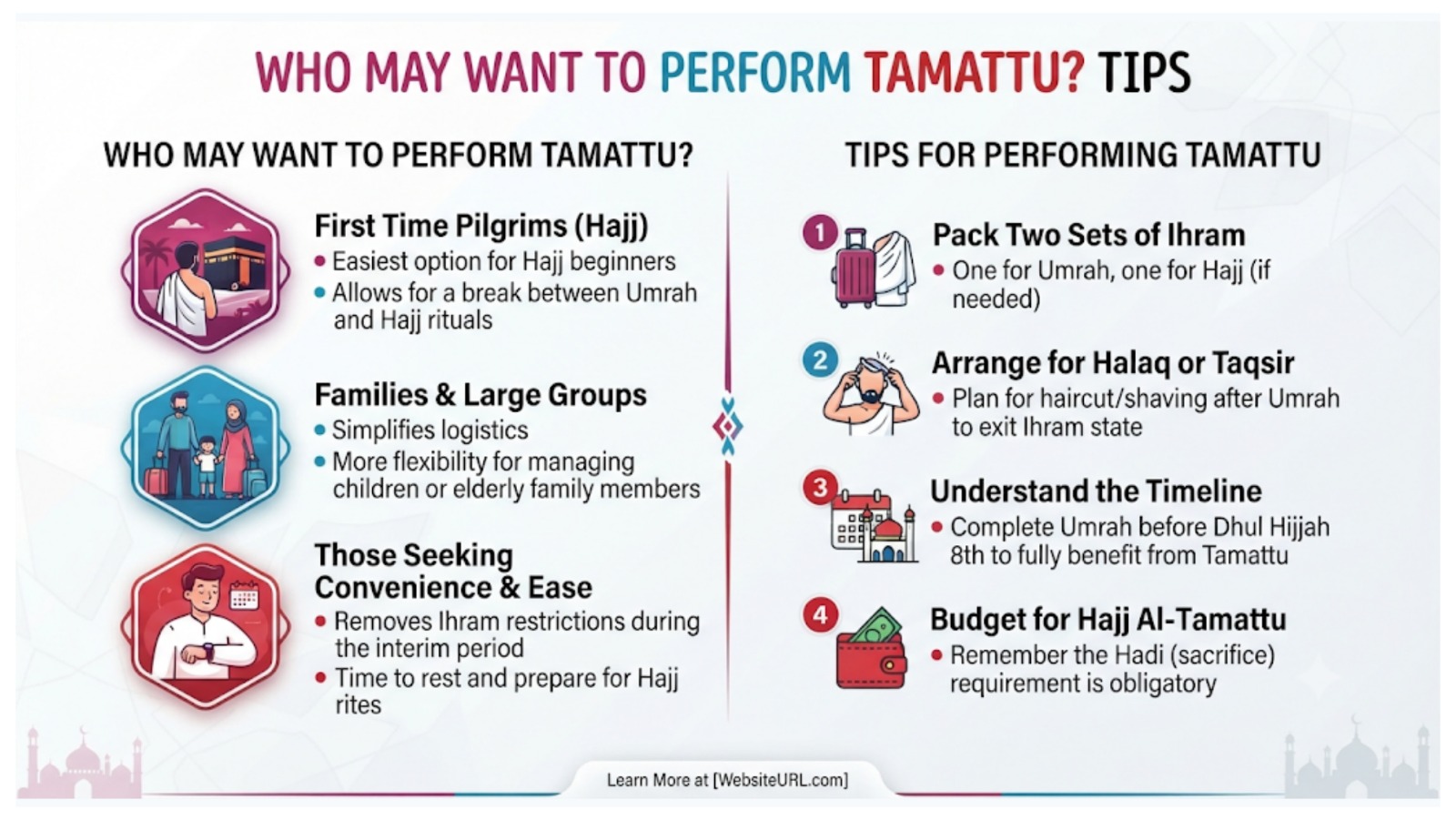
Please discuss with your provider when you will arrive as a group, when you will complete Umrah and when you are expected to go back into ihram. How will the sacrificial offering be handled?
Hajj Qiran: Combining Umrah and Hajj
Qiran means performing Umrah and Hajj together. You will go into ihram with the intention of performing both rituals. You will not complete Umrah and go out of ihram. Instead you’ll stay in ihram.
Overall you will:
- Go into ihram with intention for both Umrah and Hajj at the correct miqat.
Travel to Makkah and perform the rituals (based on your scholar's guidance).
You will stay in ihram until you reach the point of Hajj where you may go out. Continue with the shared Hajj rituals in Mina, Arafat and Muzdalifah.
The main practical difference between Tamattu and Qiran is that there is no gap between Umrah and Hajj. You should therefore understand the requirements and restrictions of staying in ihram for longer.
Generally eligible pilgrims who are not residents of the Sacred Mosque area will have to perform a sacrificial offering (hady). Pilgrims performing Qiran will perform the Hajj rituals of Ifrad but will also have to make a sacrificial offering (as per the Saudi Nusuk guide). Please confirm how this will work for you. Your package will have an official arrangement. Nusuk Hajj Rituals.
Who May Want to Perform Qiran?
Qiran may be a good option for you if your travel plans and journey allow you to combine Umrah and Hajj. You will need to plan to stay in ihram and understand the rules. Please discuss with your scholar and provider to understand the rituals, sacrificial offering and your journey.
Hajj Ifrad: Hajj on Its Own
Ifrad means performing Hajj with the intention of performing Hajj on its own. Umrah will not be performed but you may have plans to perform it separately if your travel plans and religious guidance allow.
Generally you will:
- Go into ihram with intention for Hajj at the correct miqat.
- Travel to Makkah and continue with the Hajj rituals.
- Stay in ihram until you’ve completed the rituals to go out.
- Perform the core Hajj rituals in Mina, Arafat and Muzdalifah.
Generally you will not have to perform a sacrificial offering simply because you are performing Ifrad. However, you may wish to make a voluntary offering or there may be another reason affecting your obligation. Do not use this general overview to determine your personal ruling. Please confirm with a qualified scholar.
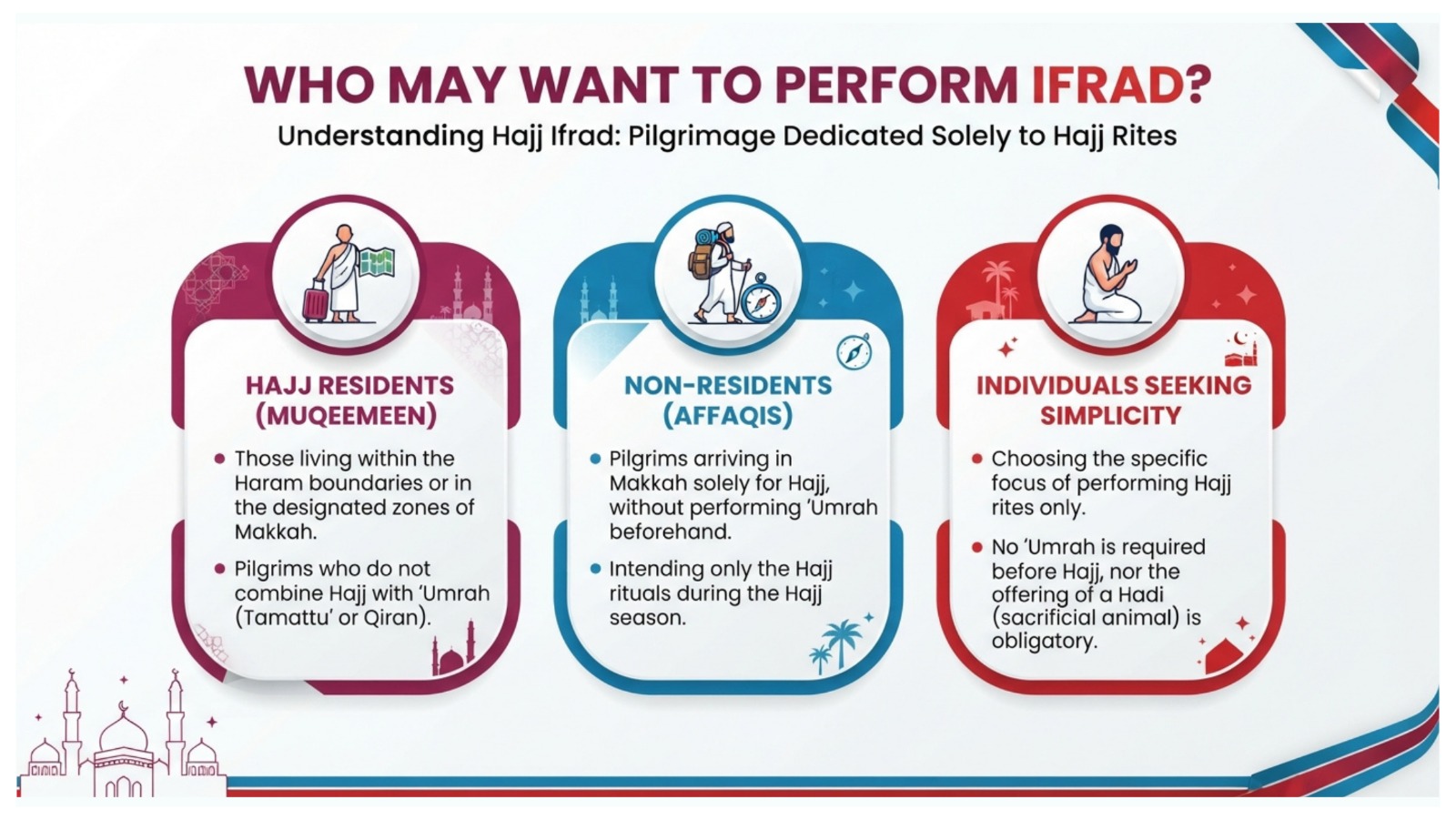
Who May Want to Perform Ifrad?
Ifrad may be a good option for you if you intend to perform Hajj on its own. Depending on your time, arrival—including transfers and airport pickup—and plans to perform Umrah separately, this may be practical. Please discuss with your provider.
Tamattu vs Qiran vs Ifrad: Key Differences
| Feature | Tamattu | Qiran | Ifrad |
|---|---|---|---|
| Intention | Umrah then Hajj | Umrah and Hajj together | Hajj only |
| Umrah performed? | Yes (before Hajj) | Yes (combined) | No |
| Go out of ihram between Umrah and Hajj? | Yes | No | No (no Umrah) |
| Go back into ihram for Hajj? | Yes | No | No (ihram for Hajj) |
| Sacrificial offering required? | Eligible pilgrims who are not residents of the Sacred Mosque area | Eligible pilgrims who are not residents of the Sacred Mosque area | No (generally) |
This is a simple comparison. The exact requirements may vary depending on your personal circumstances including whether you are a resident, your intention, Hajj type and scholar's guidance.
What Are the Shared Rituals?
Despite the differences in how Umrah is performed, all three types of Hajj will involve the core rituals. Pilgrims will travel to Mina, Arafat and Muzdalifah. They will then perform the rituals in Mina and Makkah. The exact times and order of some rituals may vary depending on your personal circumstances.
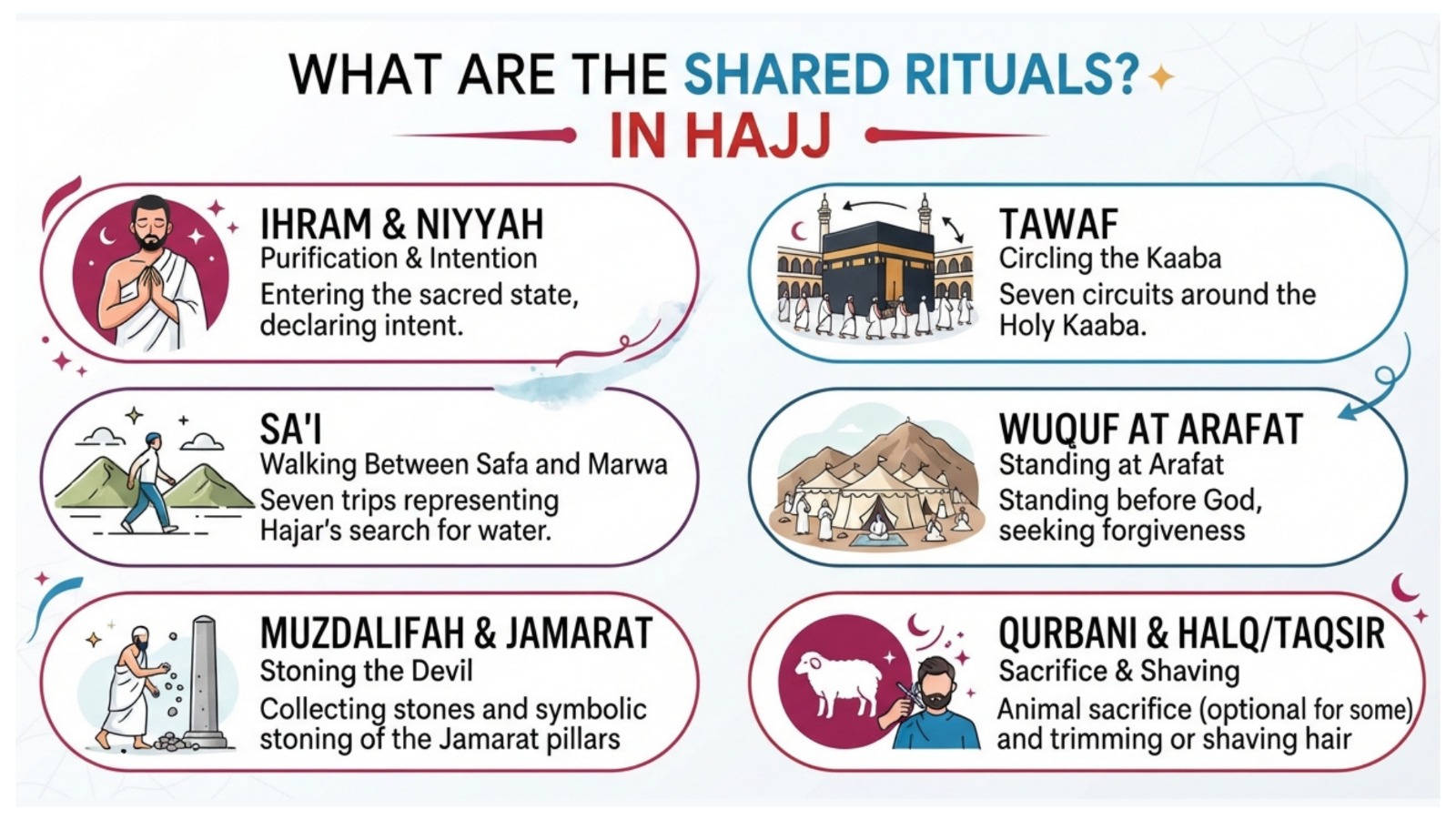
The main days of Hajj start with travelling to Mina on 8th Dhul Hijjah. On the 9th you will stand in Arafat for worship and supplication. After sunset you will travel to Muzdalifah. The next day you will return to Mina to perform the stoning ritual (Jamrat al-Aqabah). You will then continue with the remaining rituals depending on your Hajj type and journey.
Tawaf and sa‘i will also be performed. Please ask how these fit in with your journey. Nusuk explain the three types and relevant rituals. Your Hajj guide or scholar can explain what will apply to you. Nusuk Hajj Rituals.
Differences in Sacrificial Offering
A sacrificial offering during Hajj is known as hady. Generally pilgrims performing Tamattu and Qiran who are not residents of the Sacred Mosque area will have to make an offering. Pilgrims performing Ifrad will not generally have to.
This is a general overview. Do not assume that you can make an optional offering if you are performing Tamattu or Qiran. Everyone’s circumstances will be slightly different. Please ask your provider:
- Will I have to make a hady offering based on my Hajj type?
- Is there a charge included in my package?
- Will it be organised by an authorised service?
- What evidence/confirmation will I receive?
Will my personal circumstances affect this ruling?
Make sure you follow the official process. Do not send money to someone who is not verified to organise this on your behalf.
Which Type of Hajj Should I Choose?
There isn’t a one-size-fits-all answer. Your travel dates, package, country setup, time in Makkah—along with logistics like halal-friendly hotels, halal insurance (Takaful), and personal circumstances—and religious guidance may all affect which type of Hajj you should perform.
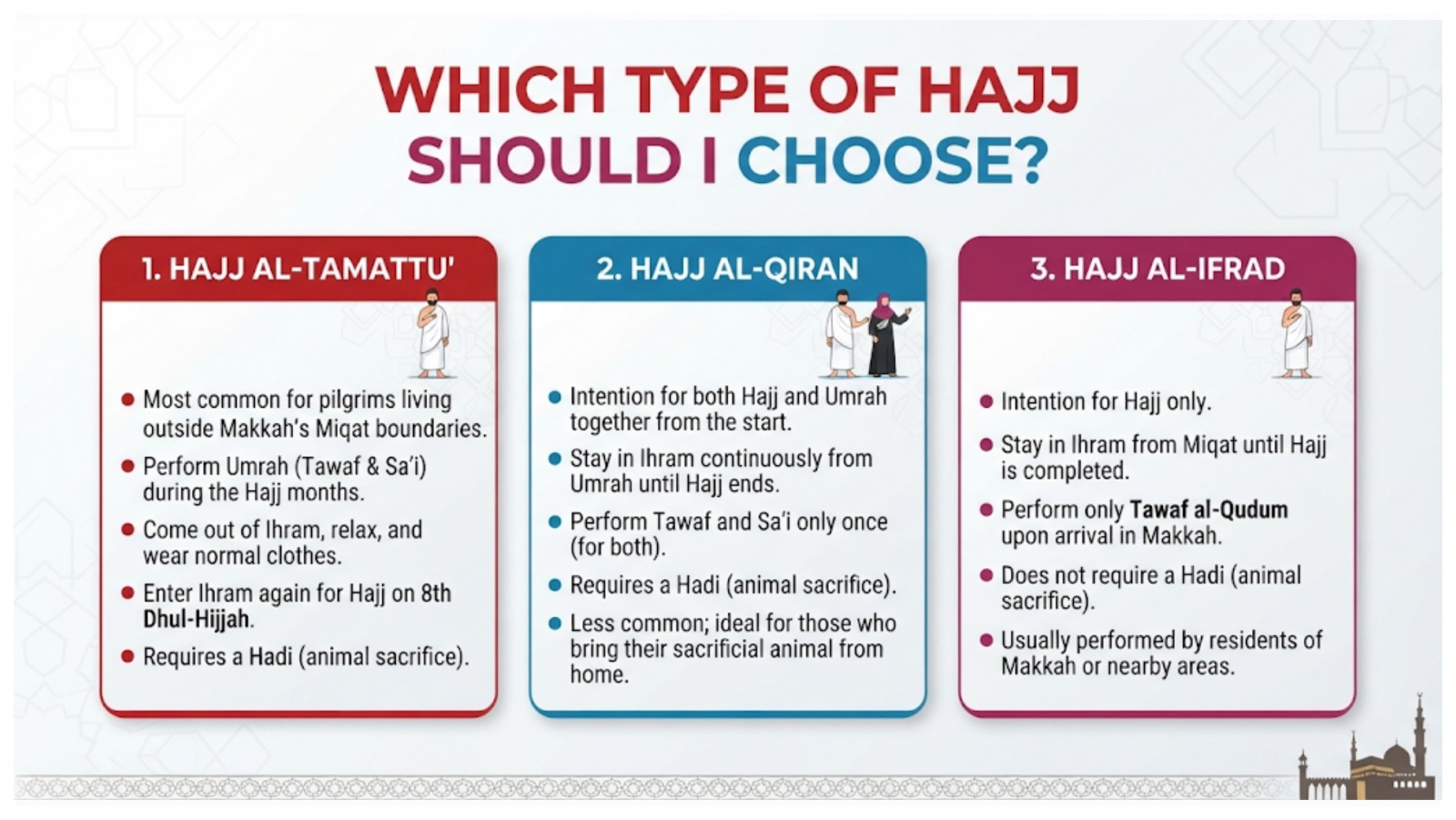
Ask your Hajj provider/scholar:
- Which type of Hajj is supported by my package and journey?
- When and where will I go into ihram?
- If I choose Tamattu, when will I complete Umrah and go back into ihram?
- If I choose Qiran, how long will I be expected to stay in ihram?
- Will I have to make an offering based on my circumstances? How will it be organised?
- How will tawaf and sa‘i fit in with my group's journey?
What should I do if my flight/arrival time changes?
Don’t choose a type simply because your friend has chosen it or it seems easier. Choose a type you understand and can perform based on qualified religious guidance and your actual travel.
Common Mistakes
Confusing the names with the ritualsThe names of the Hajj types are based on your intention to perform Hajj and Umrah. It does not mean you will be going to completely different Hajj locations. All three types will involve the core Hajj journey.
Assuming Tamattu and Qiran have the same ihram timesWhilst both involve Umrah, Tamattu will involve a period outside of ihram. Qiran will not.
Assuming the same rules apply for sacrificial offeringsRules may vary depending on your Hajj type and personal circumstances. Please confirm with an authoritative source.
Changing your intentionIf your travel plans change or you are unsure what your intention should be please contact a qualified scholar or official Hajj guide. Don’t change your Hajj type based on advice from a blog/social media.
FAQs
Which type of Hajj includes Umrah first?
Tamattu includes Umrah first. Once Umrah has been completed you will go out of ihram and then back into ihram.
Which type combines Umrah and Hajj and stays in ihram?
Qiran combines your intention to perform Umrah and Hajj. You will stay in ihram.
Which type is just Hajj?
Ifrad is performed with the intention of performing just Hajj. Umrah is not performed.
Is a sacrificial offering required for all three types?
Generally eligible pilgrims performing Tamattu and Qiran who are not residents of the Sacred Mosque area will have to make an offering. Pilgrims performing Ifrad will not generally have to. Please confirm with a qualified scholar or official Hajj provider based on your circumstances.
Can I perform Umrah separately if I choose Ifrad?
Possibly. This will depend on your travel and rules. Please ask your Hajj provider and scholar how to plan this.
Can I change my Hajj type once I’ve gone into ihram?
Don’t change your intention based on general advice online. Rules may vary depending on your circumstances. Please contact a qualified scholar or Hajj guide as soon as possible.
Summary
The main difference between the three types of Hajj is how they combine Hajj and Umrah. Tamattu includes a gap in ihram, Qiran combines them and stays in ihram and Ifrad is just Hajj. Sacrificial offerings and some rituals will depend on your personal circumstances and religious guidance.
Before travelling please confirm your intention, ihram plans and sacrificial offering with your Hajj provider or trusted scholar—and if you are extending your trip to explore best halal restaurants, halal-friendly activities, or halal-friendly cruise packages, plan those details in advance too. Knowing the differences in advance can help you prepare your questions and feel more confident following your group's journey.
Call to Action
If you’re preparing for Hajj please speak to your Hajj provider or trusted scholar to find out which type of Hajj suits your circumstances. Save this guide and share with your family/travel group. For more practical Muslim travel guides and tips visit HalalExplore.